Overcoming Measurement Limitations in CMP Nanoparticle Metrology
Liquid NanoParticle Sizer Model 9310
High-Resolution Nanoparticle Characterization for Advanced CMP Processes
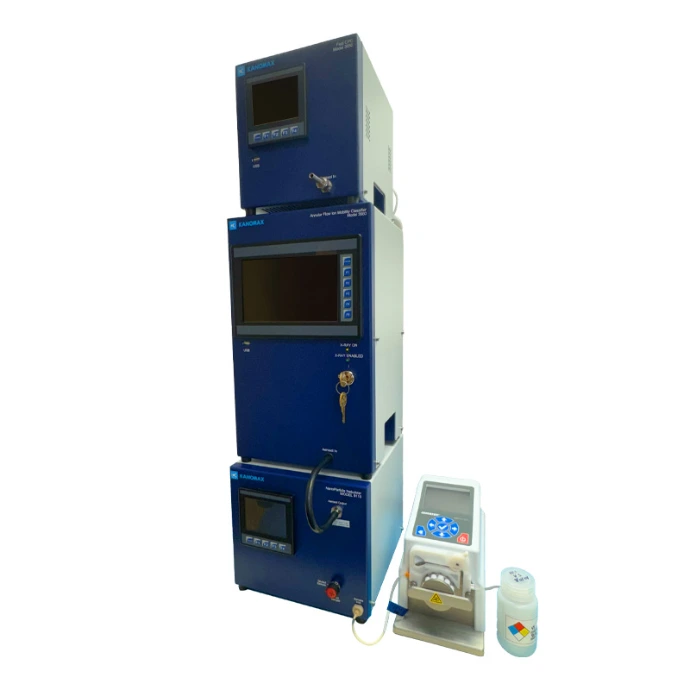
Improve Defect Control, Process Stability, and Slurry Quality with the Liquid Nanoparticle Sizer (LNS) Model 9310
As semiconductor device geometries continue shrinking below 5 nm, traditional particle sizing technologies struggle to provide the resolution needed to identify critical defects within Chemical Mechanical Planarization (CMP) slurries.
The Kanomax FMT Liquid Nanoparticle Sizer (LNS) Model 9310 delivers direct, high-resolution particle size distribution (PSD) measurements from approximately 6 nm to 562 nm, enabling semiconductor manufacturers and slurry suppliers to identify scratch-inducing particles, characterize dissolved precursors, and optimize slurry performance with confidence. components and filter membranes.
Why CMP Slurry Particle Size Distribution Matters
CMP slurry performance directly impacts:
- Wafer defectivity
- Surface planarity
- Material removal rates
- Process consistency
- Yield performance
- Manufacturing costs
Even small changes in particle size distribution can create significant variations in polishing behavior. Undetected nanoparticles and precursor materials may contribute to scratching, instability, and yield loss.
Unfortunately, many conventional particle sizing technologies lack the resolution required to detect these critical changes.

Key Challenges in CMP Slurry Metrology
Poor Resolution of Multimodal Particle Distributions
Today's advanced CMP slurries often contain multiple particle populations. Traditional techniques frequently average these distributions into a single broad peak, masking critical process information.
Result: Hidden process variation and incomplete understanding of slurry performance.
Sub-20 nm Blind Spot
Many optical and centrifugal particle sizing methods cannot effectively detect nanoparticles below 20 nm.
These overlooked particles can:
- Influence polishing rates
- Create wafer defects
- Impact slurry stabilit
- Contribute to defectivity excursions
Result: Critical process risks remain invisible.
Inability to Characterize Dissolved Non-Volatile Residue and Precursors
Dissolved species and precursor materials can significantly affect slurry performance, yet many technologies fail to identify and quantify them accurately.
Result: Missed opportunities to improve slurry formulation and process control.
How it Works
Unlike Dynamic Light Scattering (DLS), which relies on indirect optical measurements, the LNS directly measures particles through a proprietary aerosol-based approach.
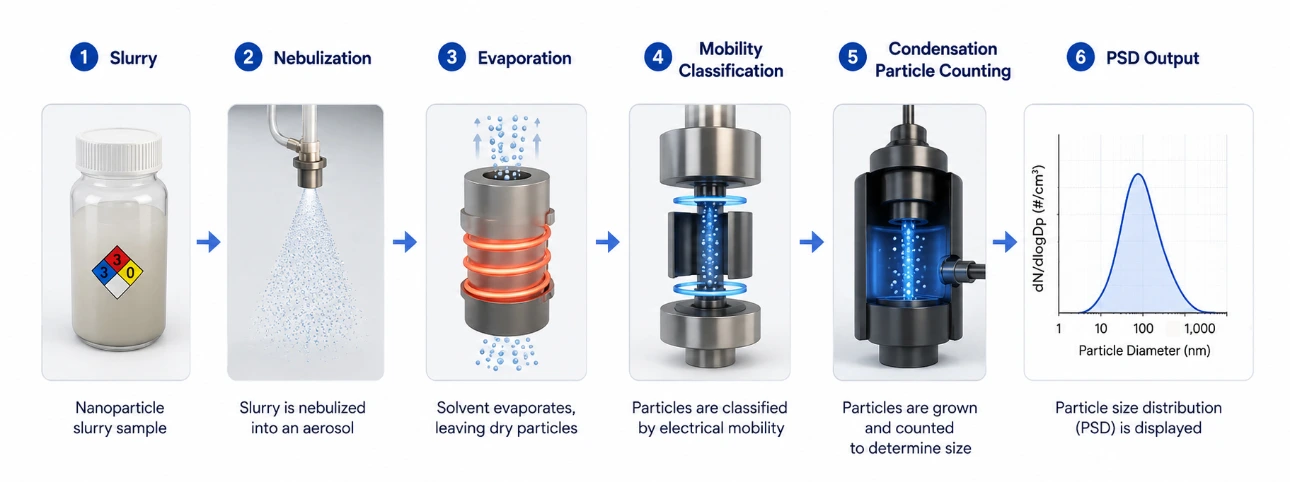
High-Efficiency Particle Counting
A condensation particle counter measures each classified particle population to generate a detailed PSD.
Electrical Mobility Classification
Particles are classified according to their electrical mobility and size.
Evaporation
The liquid component is removed, isolating the particles of interest.
Engineered Nebulization
The slurry sample is converted into a carefully controlled aerosol.
LNS vs Dynamic Light Scattering (DLS)
Why Semiconductor Manufacturers Are Moving Beyond DLS
A comparative study evaluating CMP slurry particle characterization using LNS, Scanning Electron Microscopy (SEM), and Dynamic Light Scattering (DLS) demonstrated significant advantages for the LNS platform.
What the Study Found
LNS Revealed Multimodal Distributions
The LNS successfully resolved multiple particle populations within the slurry.
DLS Reported a Broad Unimodal Distribution
Important PSD information was obscured.
Better Agreement with SEM Results
LNS measurements more closely reflected actual particle distributions observed by microscopy.
Absolute Particle Concentration Reporting
Provides meaningful process and quality control metrics unavailable through normalized DLS measurements.
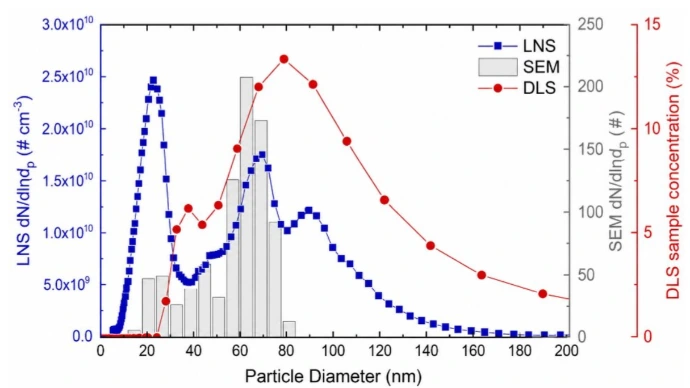
Lee, J., He, S., Song, G., & Hogan, C. J."Size Distribution Monitoring for Chemical Mechanical Polishing Slurries: An Intercomparison of Electron Microscopy, Dynamic Light Scattering, and Differential Mobility Analysis." Powder Technology, Volume 396, 2021.
Benefits for CMP Slurry Suppliers
Advanced-node customers demand tighter process control, lower defectivity, and greater batch-to-batch consistency. The LNS enables suppliers to strengthen both R&D and manufacturing quality programs.
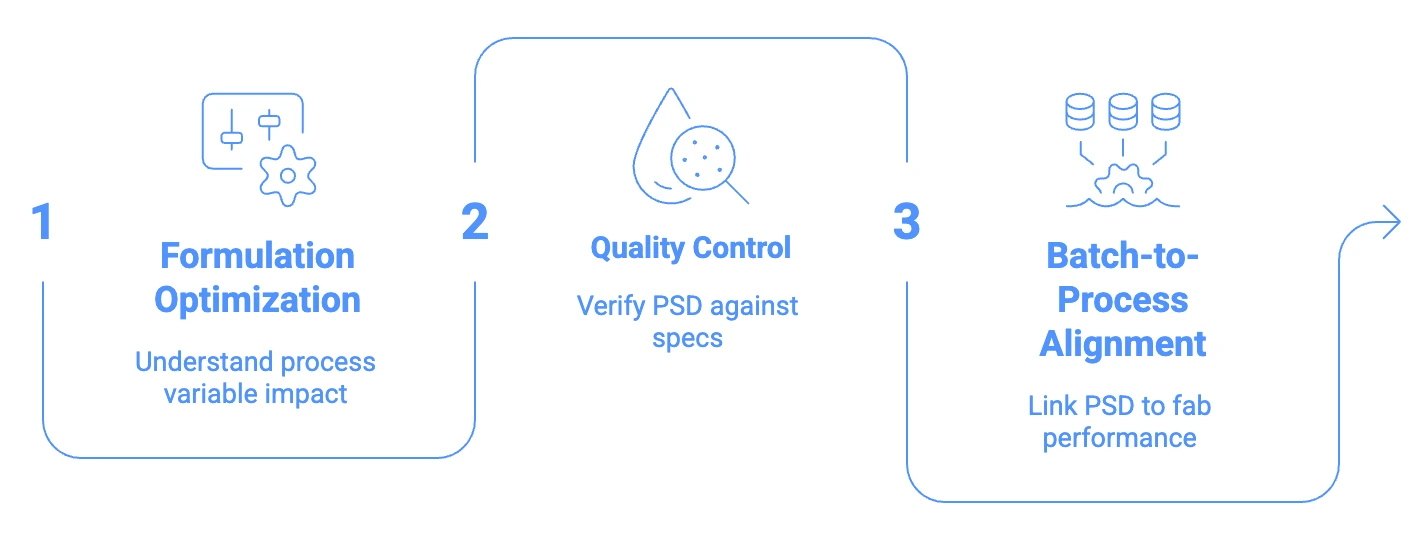
Formulation Optimization
Understand how formulation variables impact PSD modes and nanoparticle populations.
Benefits
- Accelerate development cycles
- Improve process robustness
- Optimize polishing performance
Quality Control
Verify incoming raw materials and finished slurry products against strict PSD specifications.
Benefits
- Traceable PSD verification
- Batch release confidence
- Supplier qualification support
- Shipping and receiving validation
Batch-to-Process Alignment
Directly correlate PSD measurements with fab performance and defectivity metrics.
Benefits
- Improved customer confidence
- Faster root cause investigations
- Reduced excursion risk
Benefits for Semiconductor Fabs
Improve Yield
Detect particle populations before they create wafer defects.
Reduce Scratch Defects
Identify potential scratchers that traditional methods may miss.
Optimize Removal Rates
Understand PSD changes that influence polishing behavior.
Strengthen Incoming Material Verification
Verify slurry consistency before it reaches production.
Support Advanced Node Manufacturing
Characterize nanoparticles below 10 nm where conventional technologies lose sensitivity.

Start Measuring What Others Can't